A short glossary for your first show
Flamenco words for a first night
Cante, baile, toque, palo, compás, jaleo, duende, bulería and sevillanas: the words you will hear around a flamenco show, each in plain English.
Book the flamenco show ↗Quick answer
Flamenco has its own vocabulary, and a few words explain most of what happens at a show. Song is cante, dance is baile and the guitar is toque. A palo is a named form, compás is the rhythmic cycle, jaleo is the clapping and calls of encouragement, and duende is the heightened emotion artists and audiences talk about. Bulería and sevillanas are the two dances that tend to close an evening.
Cante, baile and toque
UNESCO's entry names three strands inside flamenco: cante for singing, baile for dancing and toque for instrumental playing. The word toque refers to the guitar, and Wikipedia calls the guitarists tocaores. At a show you will usually find all three together on the stage, with the singer and guitarists seated and the dancers in front. Knowing the three words makes programme notes and conversations afterwards easier to follow.
Palo
A palo is one of the traditional musical forms of flamenco. Wikipedia says the word means a stick or a suit of cards in other senses, and here means a category. Each palo is identified by features such as its rhythm, mode, verse type and origin, and Wikipedia describes the system as popular and sometimes inconsistent. A show moves through several palos, which is why a single evening can feel solemn in one piece and festive in the next.
Compás
Compás is the rhythmic cycle that holds a flamenco piece together. Per Wikipedia, with no guitarist on hand the cycle is kept by hand claps or knuckles on a table. It describes three basic counts: binary, ternary and a twelve-beat cycle. You do not have to count along. Watching the guitarist's hand and listening to the claps will show you where the beat sits, and the dancers' footwork answers it.
Palmas and jaleo
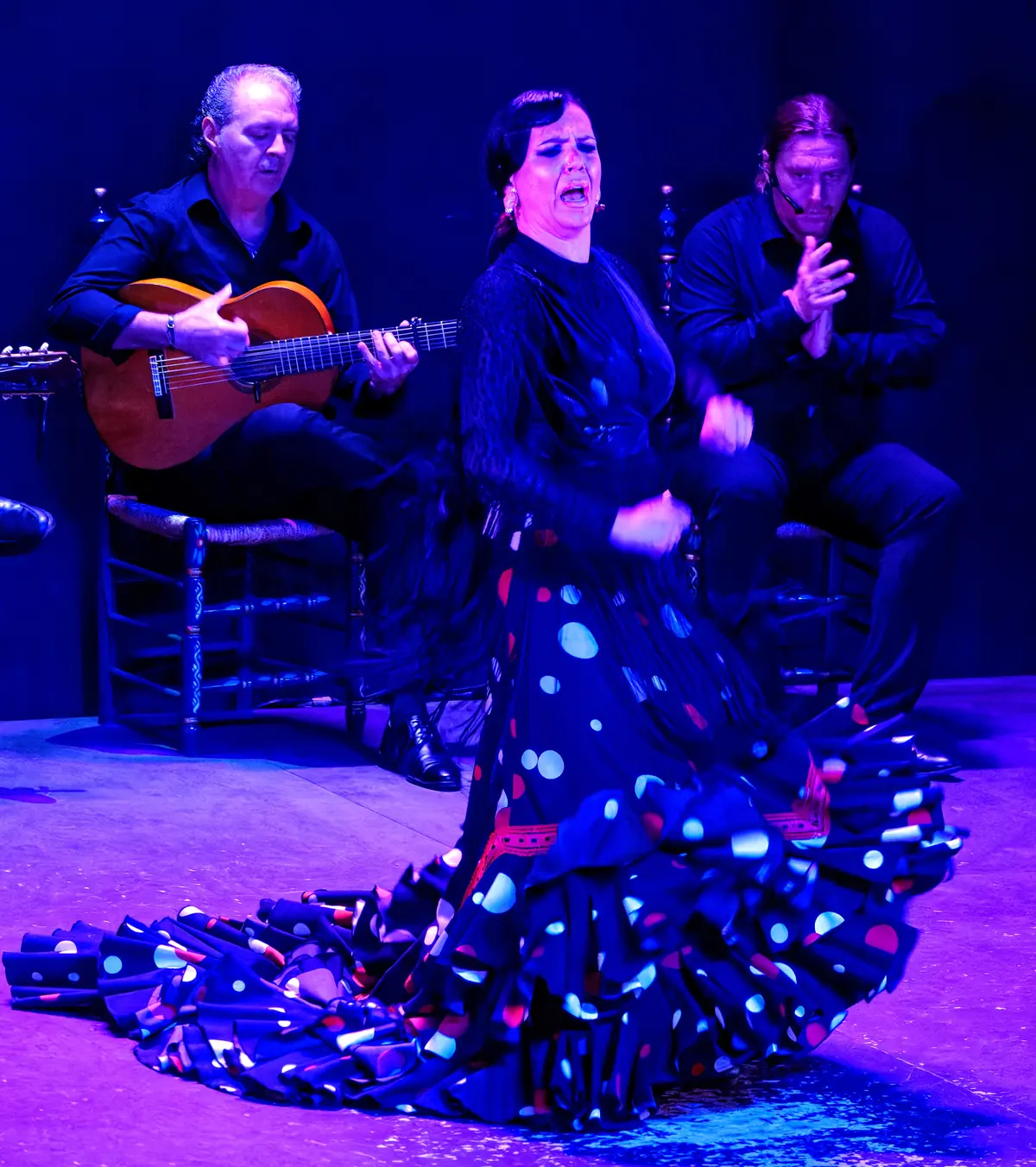
Palmas are hand claps, and they come in two colours. Wikipedia's entry on jaleo covers the claps and shouted encouragement that urge performers on, olé being the best-known call. Cupped hands give a dull, hollow sound, and stiff fingers on the palm give a sharp crack. At a tablao the artists seated at the back often provide them, so the clapping you hear is part of the music, not a prompt for the audience to join in.
Duende
Wikipedia defines duende as a heightened state of emotion and expression often connected with flamenco, and says the poet Federico García Lorca first developed its aesthetics in a lecture in 1933. It describes it as a physical and emotional response to a particularly expressive performance. You cannot book it or promise it. Players and listeners reach for the word when a piece stops being technique and takes over the room.
Bulería
The bulería is a fast, twelve-beat form. Wikipedia traces it to the Romani community of Jerez in the 1800s and says it often brings a gathering to a close. It describes it as the style that allows the greatest freedom for improvisation. The venue's site says its show ends with a joint bulería, with all the artists on stage, which is the part of the evening where the energy peaks.
Sevillanas
Sevillanas are folk songs and dances of the Seville area, descended from the older seguidilla. Wikipedia says they are heard mainly at fairs and festivals, and that people who intend to dance flamenco usually start by learning them. It adds that visitors often mistake them for flamenco itself, because they are vivid and full of turns. The venue says the show finishes with them, so you will meet the dance of the city in its final minutes.
Read next: El Patio Sevillano: the show
Frequently asked questions
What does tablao mean?
It is a venue built for flamenco performances, and also the wooden floor a dancer works on.
What is jaleo?
Jaleo is rhythmic hand-clapping and vocal encouragement from the artists, such as calls of olé.
Is duende something I will see?
It is a word for a heightened emotional moment. No show can promise it, but audiences and artists recognise it when it happens.
Sources
- Flamenco (Wikipedia article)
- UNESCO intangible heritage page on flamenco: cante, baile and toque
- Palo (flamenco) (Wikipedia article)
- El Patio Sevillano: the show (the venue's site, in Spanish)
- Jaleo (Wikipedia article)
- Duende (art) (Wikipedia article)
- Bulerías (Wikipedia article)
- Sevillanas (Wikipedia article)